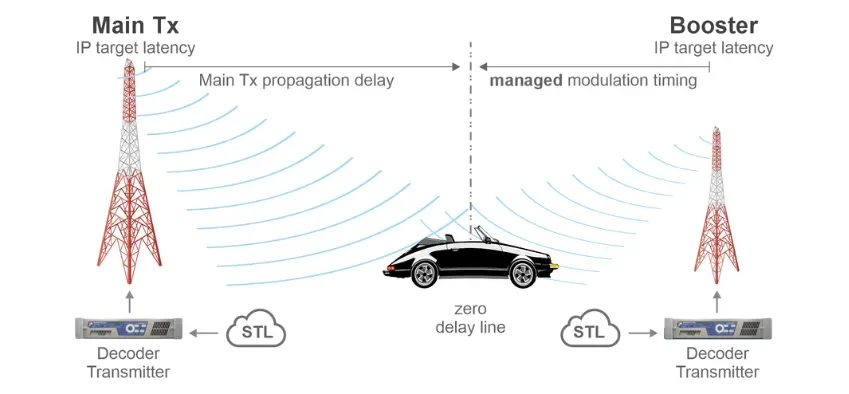


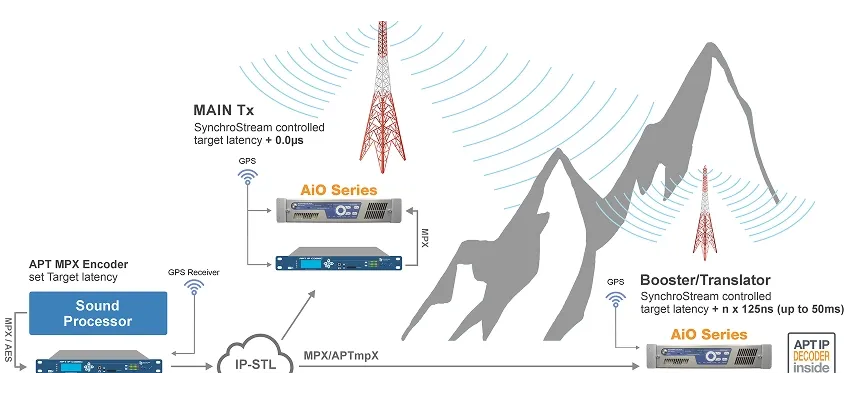
APT’s SynchroStream technology is the industry’s best dynamic STL latency control for FM Single Frequency Networks with overlapping transmitter contours. FM Radio is still the most consumed medium across society today. The programs are local, it is free, and reception can be mobile; all excellent attributes. However, if your station cannot be received well throughout the broadcast area, this will affect your listener retention. Synchronized transmitter arrangements today are designed and optimized with visualization software and measurement equipment that provide an excellent prediction of RF contours in the terrain.
Well-performing boosters and translators are important tools for increasing coverage, a better reception performance and better ratings, and leads to new revenue opportunities. With modern FM transmitters and directive antenna arrays, interference induced fading effects are kept to a minimum. However, a key factor to achieve the desired enhancements by boosters and translators is the perfect synchronization of the program feeds and control of the modulation timing in the air.
SynchroStream sets new standards in terms of the precise and location-stable placement of RF transition zones in the terrain.


SynchroStream:
SynchroStream is the must-have solution for locking content to time over IP transmissions. Broadcasting networks or surround sound transmissions benefit from the high precision of SynchroStream. The user defines the latency of a transmission, only once, and SynchroStream presents distributed contents at the exact same time.



They Trust Us for
Rock-Solid IP Transport
Our team will be happy to assist you with any Technical Support.
Please make your request via your account login. Our team will contact you as soon as possible. For emergencies, you can also contact our support hotline by phone.
Stay informed with our latest product updates, expert insights, and exclusive offers - straight to your inbox.